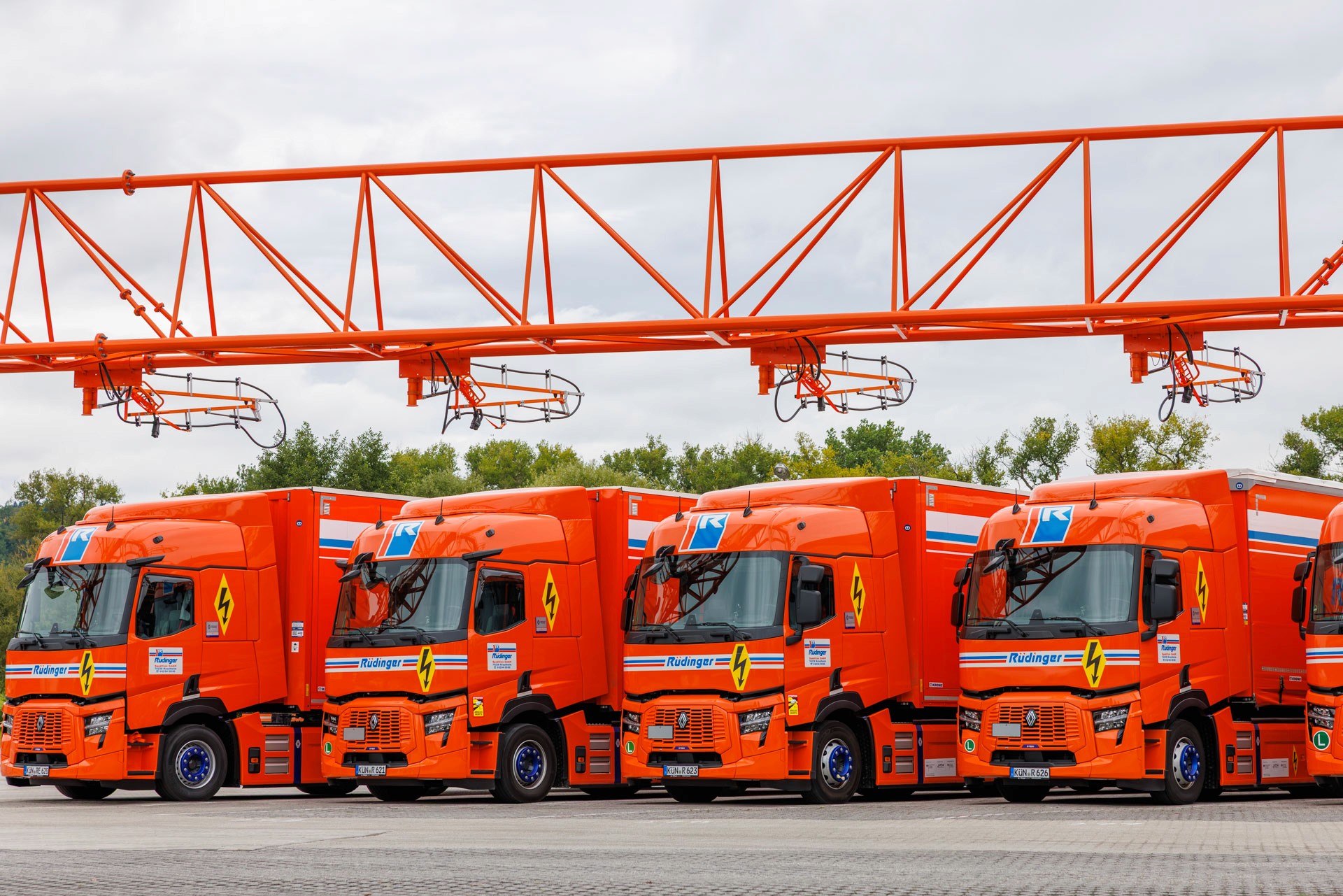


30+ E-LKWs im Betrieb
Eine der größten elektrischen Nahverkehrsflotten in Deutschland
2,6 MW Ladegeräte intelligent gesteuert
Auf 1 MW Netzanschluss – ohne Ausbau skaliert
Vision 2028
Vollständige Elektrifizierung der Kurzstreckenflotte (60 Elektro-Lkw)

Max Rüdinger
E-Mobilitätsmanager, Rüdinger Spedition
Ein Familienunternehmen mit Vision
Rüdinger Spedition ist ein Familienunternehmen in dritter Generation mit Sitz in Krautheim, Baden-Württemberg, in der Region Hohenlohe.
Mit rund 700 Mitarbeitenden und über 220 Fahrzeugen gehört Rüdinger zu den starken regionalen Logistikpartnern in Süddeutschland. Das Unternehmen ist auf Stückgut, Teil- und Komplettladungen sowie Maschinentransporte spezialisiert und betreibt an sechs Standorten mehr als 100.000 m² Lagerfläche.
Die Vision: Bis 2028 soll die gesamte Nahverkehrsflotte (60 Fahrzeuge) elektrifiziert sein – ein ambitioniertes Ziel, das Rüdinger konsequent verfolgt. Heute sind bereits mehr als 30 elektrische Lkw täglich im Einsatz.
Die Herausforderung
Rüdinger Spedition betreibt Elektro-Lkw in allen Größenklassen: 3,5-Tonnen-, 7,5-Tonnen- und 18-Tonnen-Lkw im Tagesgeschäft sowie Sattelzüge im Zweischichtbetrieb. Daraus ergeben sich sehr unterschiedliche Ladeanforderungen: kostengünstiges, langsames Laden über Nacht und schnelles Laden während der Schichtwechsel. Insgesamt wurden 30 Ladepunkte mit unterschiedlichen maximalen Ladeleistungen installiert.
Eine PV-Anlage liefert tagsüber kostengünstige Energie, während ein Batteriespeicher diese Energie puffern und zu den Schichtwechselzeiten zusätzliche Leistung bereitstellen kann. Die Randbedingung: Der Netzanschluss ist vom Netzbetreiber auf maximal 1 MW begrenzt.
Infrastrukturherausforderung
Die gesamte Ladeinfrastrukturkapazität übersteigt die Netzanschlusskapazität deutlich. Das System muss sicherstellen, dass der Verbrauch nie gleichzeitig 1 MW überschreitet
Zusätzliche Verbraucher (Bürogebäude und Gabelstapler-Ladegeräte) müssen ebenfalls berücksichtigt werden
Schnelle Reaktion auf starke Schwankungen in der PV-Erzeugung ist erforderlich
Die zentrale Frage: Wie organisiert man das Laden von 30+ Lkw innerhalb der verfügbaren Netzkapazität effizient - ohne manuelle Eingriffe und ohne Betriebsunterbrechungen?
Betriebliche Anforderungen
Fahrzeuge im Zweischichtbetrieb müssen während ihrer kurzen Verfügbarkeit schnell geladen und gegenüber anderen Ladevorgängen priorisiert werden (bei begrenzter verfügbarer Leistung)
Fahrzeuge im Einschichtbetrieb können flexibel und kostengünstig über Nacht geladen werden
Das Rüdinger-Team muss den Ladefortschritt jederzeit im Blick haben
Der Batteriespeicher muss so gesteuert werden, dass zu den Schichtwechselzeiten ausreichend Energie verfügbar ist und genau die erforderliche Leistung an die Ladegeräte liefern kann
Wirtschaftliche Ziele
Die hohen Investitionen in Fahrzeuge und Energieinfrastruktur müssen amortisiert werden
Die Fahrzeuge sollen unter Berücksichtigung der PV-Erzeugung und dynamischer Strompreise am Spotmarkt so kostengünstig wie möglich geladen werden
Der Batteriespeicher soll PV-Energie puffern und bei Bedarf in den günstigsten Viertelstunden mit Netzstrom geladen werden
Unter den vom Betrieb vorgegebenen Rahmenbedingungen sollen die Energiekosten minimiert und der Eigenverbrauch selbst erzeugter Energie maximiert werden.
Der Ansatz
ELU Charge übernimmt die Steuerung dieses umfangreichen Systems und koordiniert die Aktivitäten aller Anlagen am Standort.
Was ELU Charge im Depot steuert
Ladegeräte: Ladegeräte verschiedener Hersteller liefern die zugewiesene Ladeleistung an angeschlossene Fahrzeuge.
Batteriespeicher (BESS): Der Batteriespeicher liefert die von den Ladegeräten benötigte Leistung und lädt sich zeitlich abgestimmt mit PV-Energie oder kostengünstigem Netzstrom wieder auf.
PV-System: Ladevorgänge und Batteriespeicher werden dynamisch gesteuert, um den Eigenverbrauch von PV-Energie zu maximieren.
Netzanschluss: Das System überwacht die Netzauslastung kontinuierlich und stellt sicher, dass die 1-MW-Grenze nie überschritten wird.
Wie es funktioniert
ELU Charge berechnet und optimiert in Echtzeit neu, mit welcher Leistung angeschlossene Fahrzeuge geladen werden, wann der Batteriespeicher geladen oder entladen werden soll und wie die verfügbare PV-Energie optimal genutzt wird.
Das Ergebnis: Obwohl nur 1 MW Netzanschlusskapazität verfügbar ist, kann eine deutlich höhere Ladeleistung ermöglicht werden. Die Stromkosten sinken spürbar.
Wo Rüdinger heute steht
30+ Elektro-Lkw im täglichen Einsatz
Rüdinger betreibt heute eine der größten elektrischen Kurzstreckenflotten Deutschlands und baut sie kontinuierlich aus.
Skalierung ohne sofortigen Netzausbau
Durch die intelligente Abstimmung von Ladeinfrastruktur, Batteriespeicher und PV-Anlage könnte die Flotte deutlich wachsen, ohne auf den Netzausbau durch den Netzbetreiber warten zu müssen.
Zuverlässiger Betrieb ohne manuelles Eingreifen
Die Fahrzeuge sind bei Bedarf einsatzbereit. Die Ladevorgänge laufen automatisch – der Fortschritt aller Ladevorgänge ist bequem auf einem Dashboard sichtbar.
Transparente Kostenstruktur
Das System erfasst präzise, aus welchen Quellen und zu welchen Kosten jedes Fahrzeug geladen wurde. Dies ermöglicht eine genaue Kostenkontrolle und Preisgestaltung für unterschiedliche Einsätze.
Auf dem Weg zur vollständigen Elektrifizierung
Mit einer starken Infrastruktur und einer zuverlässigen Steuerung sind die Grundlagen für weiteres Wachstum der Elektroflotte geschaffen.